
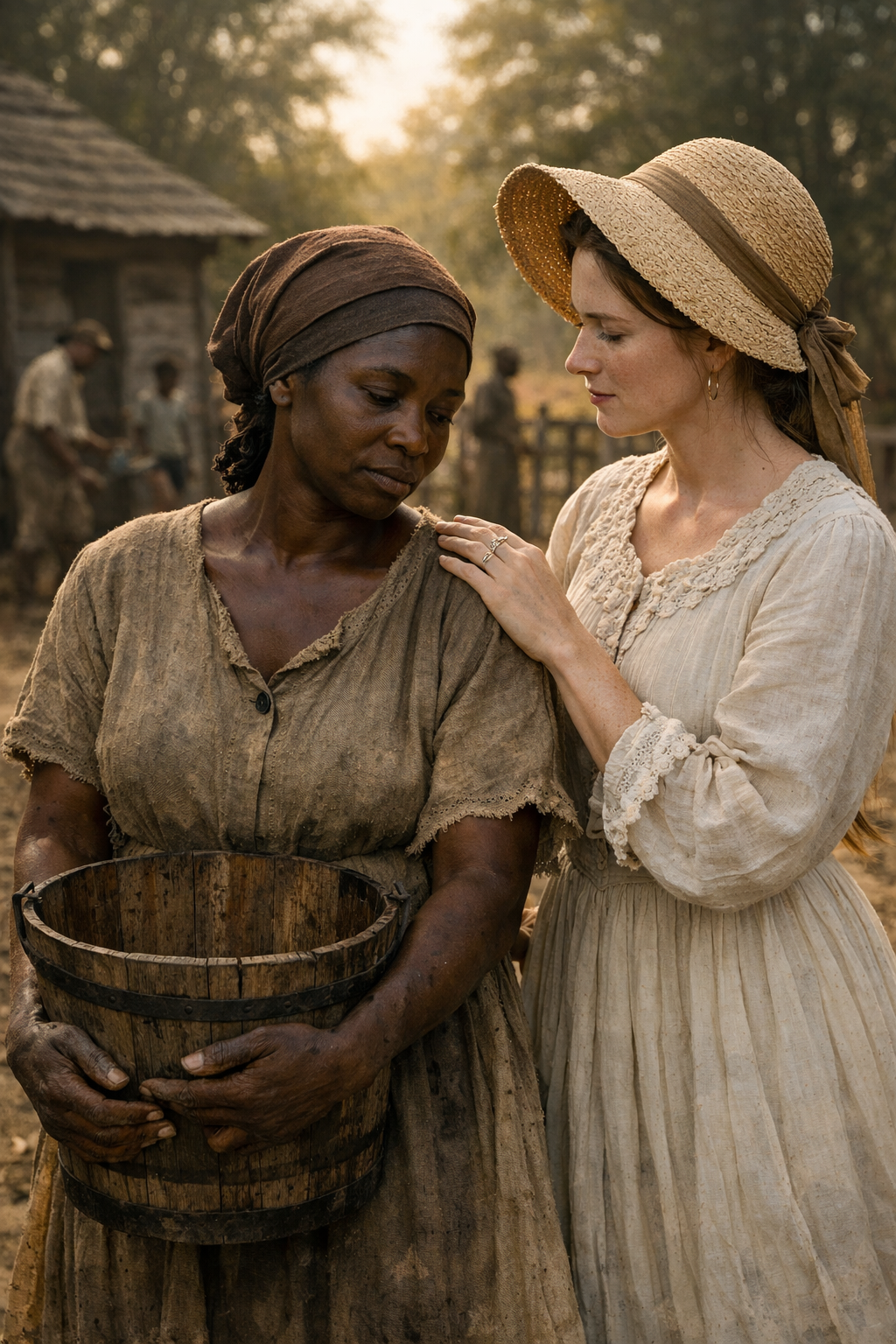
A Reflection on Slavery, Humanity, and the Heart’s Sight
Women carry a different kind of knowing. It is not louder, and it is not necessarily stronger in the ways history tends to recognize strength. But it is often deeper — intuitive, relational, and morally attentive to the suffering that systems try to normalize.
Women frequently feel what structures of power attempt to overlook. They sense the dissonance where cruelty becomes routine. They notice the quiet signals of human dignity that systems of domination work hard to silence.
When I look at history, especially the long and brutal history of slavery, a quiet question often rises within me: if women had shared equal political power during those centuries, would slavery have lasted as long as it did?
This question is not rooted in the idea that women are perfect or incapable of prejudice. History itself proves otherwise. Some women upheld the system. Some benefited from it. Some were cruel. Yet women — both Black and white — lived inside that system without being the architects of it.
The system of slavery was designed, funded, legislated, and enforced by men. Men wrote the laws that reduced human beings to property. Men established the courts that upheld those laws. Men commanded the militias that hunted those who tried to escape. The entire legal and economic machinery of slavery rested in male hands.
Women lived within that machinery, but they did not build it.
Yet there is a paradox within that history. Women were often the ones who encountered enslaved men most intimately in daily life. They saw them up close — not as abstractions, but as human beings. They saw exhaustion in their bodies, grief in their silence, resilience in their spirit. They witnessed dignity where systems insisted there was only property.
Proximity has a way of restoring humanity to those whom power tries to erase.
Women saw what the system refused to see: emotion, struggle, buried dreams, hidden strength. They recognized the quiet suffering that legal language attempted to disguise.
Some women turned away from that truth. Others did not.
Those who did not felt the moral discomfort long before society was ready to admit it out loud. They whispered their unease in private conversations. Some carried those questions silently into prayer, sensing that something in the structure of the world was profoundly wrong.
This is why I believe the feminine voice — often dismissed, rarely counted in law — could have disrupted slavery’s longevity if it had held equal political authority. Not because women loved enslaved people in sentimental ways, but because relational awareness makes it harder to sustain dehumanization.
When you encounter suffering closely enough, the abstraction begins to collapse.
Women tend to experience injustice relationally. Where systems rationalize cruelty through logic or economic necessity, the relational mind asks different questions. It feels the contradiction between moral teaching and lived reality. It senses when power and truth begin to separate from one another.
If women had possessed equal authority to legislate, vote, judge, and challenge the legal structure of slavery, the moral conflict surrounding that system might have entered the law much sooner.
History often tells the story as if slavery ended because society suddenly developed a conscience. But the deeper truth is that systems change when laws change. And laws change when those who see injustice gain the authority to challenge it.
For most of slavery’s existence, the only voices that mattered in the legal world were male voices. Women had no vote, no representation, and no influence over the structures that preserved oppression.
They could see the injustice, but they could not legislate against it.
This is where history reveals one of its most sobering realities: many people may recognize wrongdoing long before society grants them the power to change it.
Imagine, for a moment, if half the population — bringing a different moral lens — had possessed that authority earlier. The legal framework might have shifted sooner. Human dignity might have been defended sooner. The cruelty might have been interrupted sooner.
Because when women encounter suffering, they rarely remain detached observers. They feel it. And what women feel eventually becomes what women fight.
Power changes the course of history, especially when compassion and moral discernment enter the room with it.
This is why women’s voices matter. This is why women’s leadership matters. And this is why women’s spiritual discernment matters.
Imagining a world in which women held full power is not an attempt to rewrite history. It is an attempt to recognize the human capacity that history often refused to acknowledge.
The feminine heart has always been unsettling to systems built on domination.
Because the heart sees what power prefers not to confront.
And once truth is seen clearly, it rarely allows the world to remain the same.